February 23, 2026
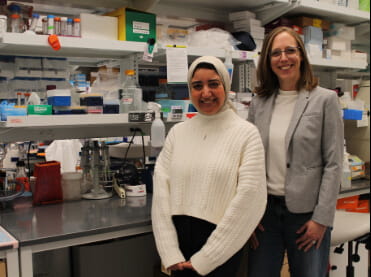 A new study led by University of Pittsburgh researchers at UPMC Hillman Cancer Center identified a new target that could help improve treatment for people with lung cancer that has spread to the brain: extra copies, or amplification, of the MET gene.
Non-small cell lung cancer, which comprises about 85% of all lung cancer cases, exhibits the highest rate of brain metastases among all solid tumors. The disease often progresses in the brain, shortening the overall survival rates for these patients as there is a lack of therapies developed specifically for these brain metastases.
The research published in The Journal of Clinical Investigation showed that extra copies of the MET gene, which is responsible for cell growth and invasion, are found much more frequently in brain metastases than in primary lung tumors. This finding suggests that brain metastases are distinct from extracranial disease and offers a unique therapeutic opportunity.
“MET amplification in the brain is often missed because standard biomarker testing is usually performed on tumor samples taken outside of the brain,” said lead author Laura Stabile, associate professor of pharmacology and chemical biology. “We are working on developing more accurate, non-invasive ways to detect MET amplification in the brain, eliminating the need for a brain biopsy to find this alteration.”
“This work shifts how we think about brain metastases, not simply as cancer that has spread, but as molecularly distinct tumors that can be targeted,” Stabile continued. “Identifying MET amplification is critical because FDA-approved drugs already exist that target this gene and could benefit these patients,” she continued.
The researchers also found that MET amplified brain metastases had other important features, changes to the microenvironment around the brain tumor, metabolic reprogramming, and were also linked to poorer overall survival.
“As lung cancer treatments continue to improve, patients are living longer. But that also means more people develop brain metastases over the course of their disease. This makes it even more urgent to expand treatment options available to them. Our findings highlight MET amplification as a common and targetable alteration in brain metastases, and as a biomarker that can identify patients likely to benefit from already available MET-targeted agents. This opens the door to more personalized treatment, and ultimately better outcomes for this patient group,” added Stabile.
The study was the result of collaborative efforts of 20 experts in lung cancer biology, targeted therapy, oncology, pathology, bioinformatics and biostatistics, and surgery from the University of Pittsburgh, Penn State Medical Center, West Virginia University, and Caris Life Sciences. Dr. Stabile was a co-corresponding author along with Timothy Burns, MD, PhD, who was at UPMC Hillman while conducting this research.
The research was supported the National Cancer Institute (R01 CA244270-01A1, P50CA090440, P30CA047904), Department of Defense (W81XWH-22-1-0350, American Cancer Society Research Scholar Award (RSG TBG – 132939, the University of Pittsburgh Institute for Precision Medicine, Libby’s Lungs, and We Wish Foundation. UPMC Hillman Cancer Center supported research reported in this publication used the Biostatistics Facility (RRID:SCR025355), Cancer Bioinformatics Services (RRID:SCR025356), Cancer Genome Facility (RRID: SCR025357), In Vivo Imaging Facility (RRID:SCR025360), and Animal Facility (RRID:SCR025152).